Flipping Thrift Store Finds: A Beginner's Profit Guide
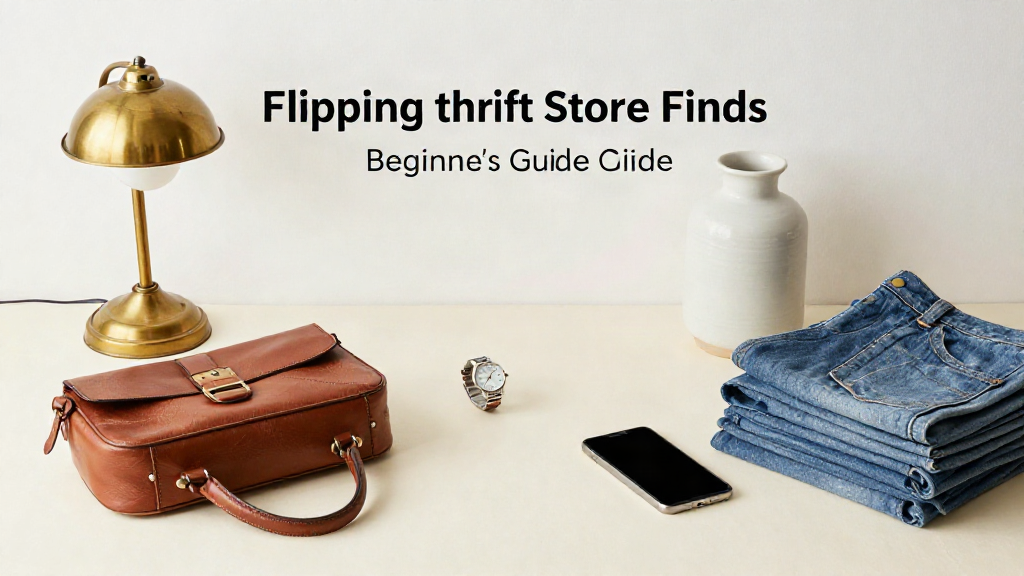
Flipping Thrift Store Finds Without Losing Money
You walk into a thrift store with twenty dollars and pure hope. Two hours later you leave with a ceramic owl, a broken lamp, and a vague feeling that you just bought someone else's trash.
It happens to every beginner. Flipping thrift store finds is not about luck or a magic eye. It is about asking the right questions before your money leaves your wallet. Do that and you stop guessing.
Here is the beginner's version. No jargon, no antique-roadshow fantasy. Just the three questions that separate a profit from a donation, which categories actually move, and one habit that keeps you out of trouble on every single item.
The Three Questions to Ask Before You Buy Anything
Individually, each question is simple. Together, they are the whole game. Run them in order and you will pass on a lot of stuff - that is the point.
1. What is it actually worth?
Not what you hope it is worth. Not what the tag says. What a real buyer will pay for it today, used, in its current condition.
Most beginners skip this step and price from imagination. They see a "vintage" camera, remember that some cameras are worth money, and pay fifteen dollars for a model that sells for twelve. That is not a flip, that is a slow loss.
This is the question a value check answers in seconds. Scan the item with Snaflip before you commit and you get its real second-hand value, how fast it resells, and whether the asking price is fair - in under ten seconds. If the number does not work, you put it back. Politely. No drama.
2. What will it cost you to resell it?
The price tag is never the full cost. Add the platform fee, the shipping, the packaging, the time, and the gas. A twelve-dollar item that sells for twenty is not eight dollars of profit. It is closer to three, and that is before you spend forty minutes photographing it.
Rule of thumb for beginners: if your all-in cost is not at least a third of the expected sale price, walk away. Boring? Yes. Broke? No.
3. Can you actually sell it?
An item is only worth what someone will hand over for it, and some items have almost no buyers at all. Ask yourself honestly: who is searching for this? If you cannot name the buyer in one sentence - "people restoring old turntables," "collectors of mid-century barware" - you probably cannot sell it.
When you are not sure, that is exactly what the resale-speed reading is for. Slow-moving items eat shelf space and morale.
Categories That Resell Fast Versus Ones That Sit Forever
Knowing what moves is half of flipping thrift store finds. Speed matters more than the occasional big score, because fast inventory pays for your next trip.
Usually moves fast
- Branded clothing and shoes. Recognizable labels, clean condition, in-demand sizes. Sold as individual pieces, not mystery bundles.
- Small kitchen and barware. Cast iron, quality knives, espresso tools, cocktail glassware. Useful, cheap to ship, easy to photograph.
- Tools. Hand tools, vintage drills, workbench classics. Buyers are practical and they search by name.
- Video games, consoles, and accessories. Even older generations hold value. Cords and controllers sell on their own.
- Jewelry and watches. Even costume pieces move, as long as you check them properly.
Usually sits forever
- Large furniture without a local buyer. Massive shipping cost, tiny margin.
- Generic decor and knickknacks. The owl. The plastic frame. The "live, laugh, love" sign.
- Anything missing a critical part. A lamp without its shade is a lamp no one wants.
- Untested electronics. If you cannot prove it turns on, you are selling a gamble, and buyers price gambles at almost nothing.
- Damaged clothing. Stains, holes, and missing buttons turn a ten-dollar find into a two-dollar donation.
Build One Habit: Value-Check Every Item
Here is the habit that changes everything. Before your money leaves your hand, every item gets the same treatment. If you are standing in a thrift store aisle, pause and check. If you found it online, check before you click buy. If someone offers you a box of "stuff," check the pieces that carry the value.
The habit has three steps: scan, analyze, decide. Look up the real value. Compare it to your all-in cost. Buy only when the math and the buyer make sense.
Two rules keep it honest:
- Never buy on a feeling. Excitement is not data.
- Never assume a price. Even experienced flippers are wrong about specific models, editions, and condition grades.
Snaflip is blunt about its own limits: it gives you a fast, trustworthy second opinion, not a guarantee. Condition, completeness, and demand still matter, and you are the one holding the item. But a second opinion before you pay beats a regret after you pay. Every time.
Your First Flipping Trip, Planned
Start smaller than you think you should. Budget twenty to forty dollars and set one goal: practice the three questions until they feel automatic. Pick items that fit a category you understand. Value-check all of them, even the ones you are sure about - especially those.
Track your numbers in a plain note. What you paid, what you sold it for, what the fees ate. After ten items you will know more than most people learn in a year, because you will be working from real numbers instead of vibes.
That is the whole beginner's guide, condensed: ask what it is worth, ask what reselling will cost, ask whether a buyer exists. Then let a ten-second value check confirm it before you hand over your cash.
Scan. Analyze. Flip. And never overpay again.