Snaflip vs. eBay Sold Listings: Which Value Check Wins?
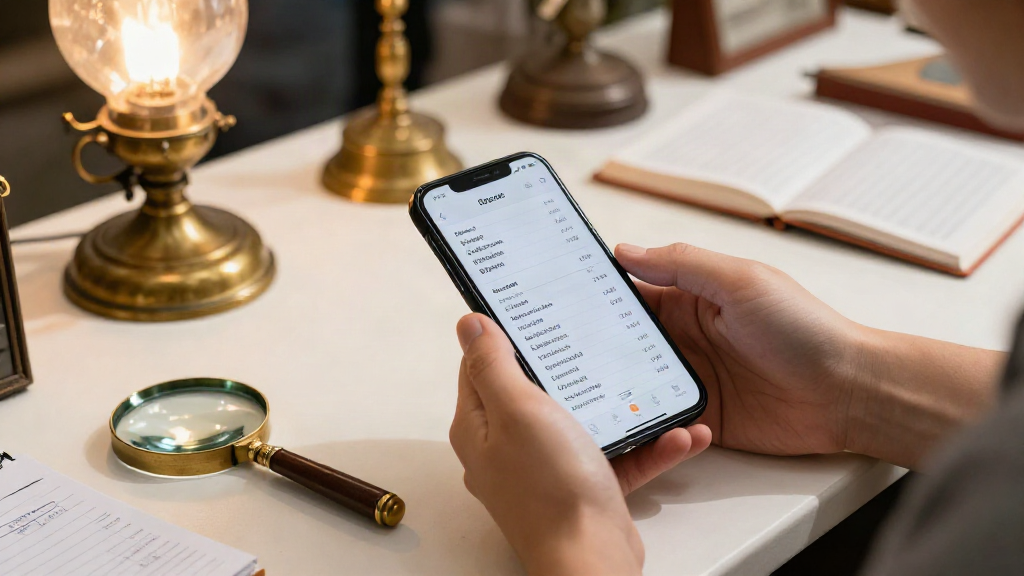
You're standing at a brocante table. There's a brass lamp in front of you, a €40 price tag on it, and a seller who's already looking past you to the next buyer. You've got about ninety seconds to decide. And you've got two ways to check the value versus eBay sold listings: the way you've always done it, or the way you could be doing it now.
Let's actually compare them. Not the marketing version - the honest version. Because the manual method isn't dead, and the app isn't magic. Knowing which one to reach for is the whole game.
How the manual route works (and where it eats your time)
If you're an experienced flipper, you already know this drill by heart. You open the eBay app, type in a search, then filter to Sold Items and Completed Listings. You scan the results. You ignore the outliers - the one optimistic seller asking double, the one desperate seller dumping stock. You eyeball the median. You factor in shipping, fees, and the fact that "sold" listings don't always mean the buyer actually paid.
Then you do it again, because your first search was too broad. Then again, because the first three results were the wrong variant, wrong colorway, or a reproduction.
It works. That's the thing - it genuinely works. eBay sold listings are real transaction data from real buyers, and no shortcut replaces that. If you're flipping $400 sneakers or vintage watches where a 10% swing is $40, the manual deep dive is worth every minute.
But here's where it eats you:
- Time. A careful comp check takes two to five minutes. Multiply that by a full day of a flea market and you've spent an hour or more just staring at your phone.
- Skill tax. Reading sold listings well is a learned skill. New flippers misread the median constantly, get spooked by one high result, or miss that the item has been trending down for six months.
- Condition blindness. A photo of a "sold" listing doesn't tell you the seams of your lamp are cracked. You're comparing a listing to a physical object, and the listing doesn't know what you're holding.
So the manual route is accurate but slow, and it rewards experience. Which is exactly why you keep doing it.
What a photo scan gives you in seconds
Snaflip works differently. You point your camera at the item. Scan. Analyze. Flip. In under ten seconds you get a valuation, a read on how fast it resells, and a verdict on whether the price in front of you is fair.
A few things worth being straight about:
It's built for the moment, not for the archive. The scan is designed to answer one question fast: should I pay this price? It returns a clear number and a deal status you can act on while the seller is still waiting.
Condition is where it earns its keep. The scan reads what's actually in front of you - the wear, the finish, the version - rather than comparing you to a generic listing photo. That's the gap the manual method has always had.
Speed is the whole point. Two to five minutes of filtering becomes a few seconds of aiming. Over a market day, that's not a productivity tweak. That's the difference between checking twenty items and checking sixty.
And honesty time: a scan is a second opinion, not an appraisal. It won't tell you that a lamp is a rare first-run production piece that a specialist collector would pay triple for. It's a fast, trustworthy read on the going rate - not a substitute for the deep knowledge you've already built.
The practical split: when to trust the manual deep dive
Here's how to actually run both without wasting your day.
Go manual when the stakes are high and the item is complex. If you're looking at anything where a misread costs you real money - signed pieces, rare variants, graded collectibles, anything with a provenance story - do the full comp check. Filter to sold, read twenty results, discount the outliers, watch the trend line. That five minutes is cheap insurance.
Go scan-first when you're sorting volume. Mid-market flips, housewares, common vintage, anything under roughly $150 where a 10% miss isn't a disaster. Scan it, get the number, and let the scan decide whether the item even deserves the manual deep dive. You'll filter out nine of ten items in seconds and spend your comp-checking minutes only on the ones that matter.
Use the scan as your first pass, then verify manually on the winners. This is the combo that most experienced flippers land on. The scan clears the noise; the sold-listings check confirms the one or two pieces you're serious about. You keep the accuracy you've earned and lose the hours you've been bleeding.
And trust the manual answer when the two disagree on a high-value piece. If your comps say $300 and the scan says $120, that's a signal to dig, not to decide. The scan is telling you the market is thin or the condition is worse than you think. Look closer.
The bottom line
Reading eBay sold listings yourself isn't obsolete, and nobody at Snaflip is going to pretend it is. It's the most accurate value check there is - when you've got the time, the skill, and the stakes to justify it.
The point of a photo scan is to spend that accuracy where it counts. Clear the junk in seconds, aim your deep dives at the pieces that actually deserve them, and stop paying for a five-minute research session on a $20 mug.
Never overpay again doesn't mean never research again. It means knowing which tool the moment calls for - and having the fast one ready when the seller is still waiting.