10 Valuable Vintage Items to Look For at Brocantes
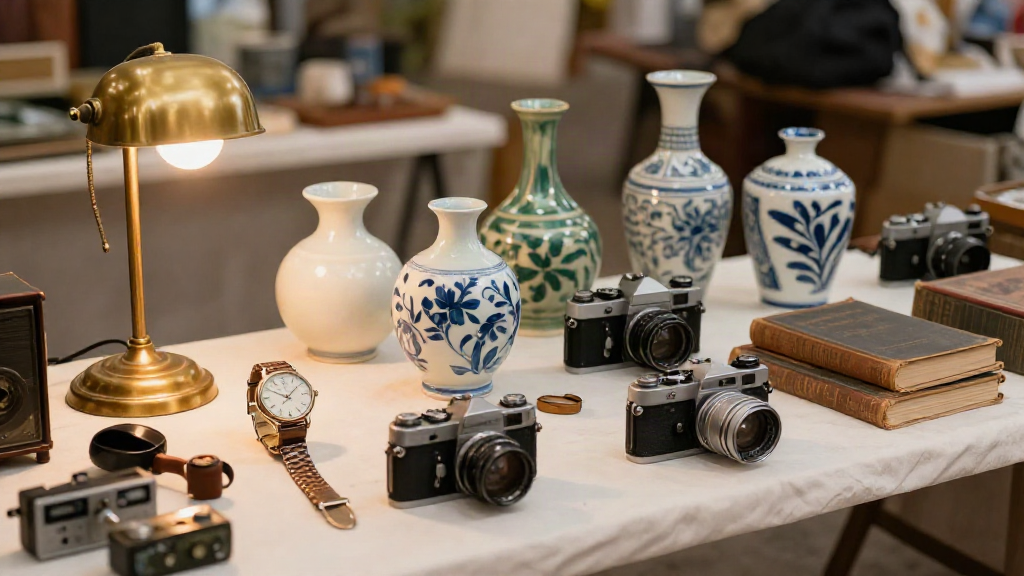
Somewhere on a folding table this weekend, there's a dusty lamp priced at €3 that resells for €67. There's a watch in a shoebox marked "doesn't work" that a collector would happily pay €120 for. The seller isn't lying to you - they just don't know. That gap between what someone asks and what something is actually worth is where flippers make their money.
So here's your cheat sheet: ten valuable vintage items to look for at brocantes, flea markets, and garage sales. Not the obvious stuff everyone fights over. The categories that get mispriced because they look like junk.
Why "junk" categories quietly hold real value
Three things drive the gap between asking price and real value.
First, the seller prices by appearance, not by identity. A brass lamp is "a lamp" to them. It's a specific maker, a specific era, and a specific model to the market.
Second, condition fears get overpriced in the buyer's favor. "Needs rewiring" or "missing the box" knocks a chunk off the ask, but collectors often pay close to full price for pieces they can restore themselves.
Third, trends cycle. What was worthless in 2005 is hot in 2026. Sellers using old gut feelings leave money on the table.
Your job isn't to know everything. It's to know which categories to slow down for - and then check fast.
The ten items worth a closer look
1. Mismatched brass lamps
Brass table lamps from the mid-century and earlier get treated as generic lighting. Look for heavy, solid bases (not hollow pressed metal), articulated or swan-neck arms, and a maker's mark under the base. A brass lamp in decent shape routinely resells for €40-€90, and the ones with designer provenance go far higher. Test the switch, check the cord isn't cracked, and price from there.
2. Mechanical wristwatches, even "broken" ones
Quartz watches are mostly noise. Mechanical ones - especially Swiss or Japanese names from the 1950s through the 1970s - hold value even when they don't run. A service is €60-€150 and can turn a €20 flea-market find into a €150-€400 sale. Check for a signed dial, an original crown, and a caseback you can open with a proper tool.
3. Denim, workwear, and vintage leather jackets
Old denim and leather age the way collectors want: patched, faded, and honest. Look for selvedge edges, chain-stitched hems, and heavy hardware on denim; on leather, look for thick hide, quality zips, and a clean lining. Sellers price these like used clothing. Buyers price them like heritage pieces.
4. Mid-century modern ceramics
Studio pottery and mid-century ceramic vases are the classic "looks plain, sells high" category. Flip it over. A potter's stamp, a country of origin, or a named studio changes everything. Matte glazes, unusual shapes, and hand-thrown irregularities are all good signs. One signed vase can cover your entire morning of market fees.
5. Vintage film cameras and lenses
Boxed point-and-shoots are a trap, but real film cameras and manual lenses are not. Rangefinders, SLRs from the 60s-80s, and prime lenses with clean glass keep their value because the film crowd keeps shooting. Check the shutter fires at multiple speeds, the aperture blades move freely, and the glass is free of fungus and haze.
6. Sterling silver, hallmarks, and old cutlery sets
"Silver-plated" and "sterling" are worlds apart. Look for the word STERLING, a 925 stamp, or assay hallmarks on the underside. Weight matters more than looks - a tarnished, ugly set can be worth more than a shiny plated one. Weigh it mentally and let the stamp do the talking.
7. First-edition and vintage cookbooks
Old books are cheap by the shelf. Specific ones are not: first editions, signed copies, vintage cookbooks from famous chefs, and regional titles with intact dust jackets. Check for a stated "First Edition," a matching copyright and printing line, and no ex-library stamps.
8. Retro audio gear and turntables
Turntables, receivers, and speakers from the 70s and 80s are heavy, so sellers underprice them out of laziness. Look for known hi-fi names, solid metal faceplates, and real wood veneer. Test that the platter spins and the tonearm moves freely. Working units sell fast; even non-working ones sell to repairers.
9. Vintage toys with original packaging
Boxed is the whole game. A loose toy is a toy; the same toy in its original box, with the insert and paperwork, can be worth five to ten times more. Look for die-cast cars, early action figures, and anything with a clean, unbattered box. Sellers see "old toy." Collectors see the box.
10. Tools, and specifically old hand tools
Not power tools - hand tools. Old chisels, planes, and wrenches from respected makers are collected and used. Look for forged steel, wooden handles, and a clean maker's stamp. A rusty plane from a bucket can clean up into a sale.
How to confirm value and resale speed before you commit
A list gets you to the item. It doesn't tell you what to pay. Three quick checks close that gap:
- Identify, don't guess. Read the marks, stamps, and signatures before you decide. The difference between two nearly identical vases is often one word on the base.
- Check sold prices, not asking prices. What people ask online is fiction. What items actually sold for last month is signal. Resale speed matters too - a €200 item that takes eight months to sell is a worse flip than a €60 item that moves in a week.
- Time-box the decision. Markets move. Give yourself under ten seconds per item to decide whether it's a real find or a distraction, then act.
That's exactly where scanning helps. Point your camera at the piece, and Snaflip returns its real second-hand value, how fast it tends to resell, and whether the price in front of you is fair - in under ten seconds. No guessing, no scrolling, no lost finds while you check your phone at the next table.
You don't need to be an expert in ten categories. You need to spot the ones worth slowing down for - then confirm the numbers before the seller's mood changes. Scan it, check the value, and never overpay again.